Thursday, March 15, 2012
Wednesday, March 14, 2012
March 10 "For Fair Elections," Part II
I've got no brilliant commentary to add, but I do have a few pictures. Mostly we stood way in the back, near a screen that was replicating what was happening on the stage, which was about a half-mile further down Novyi Arbat. This time was a little odd because they confined the crowd to one side, an open plaza - pedestrian area. What this did mean, however, is that once we decided to get clear of the crowd, we walked down the other side of the street and got a look at the larger crowd at the front, near the stage.
| "Robocop cleans our Detroit of theives and liars." |
| Robocop is against 'slave-cops.' [Anyone have a better way to translate that one?] |
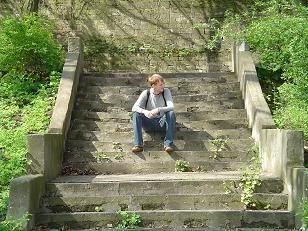
| Hey, an actual picture of me on my blog. That doesn't happen often. |
| This is Udaltsov, the "Left Front" leader. He called for a million people to march on May Day. |
Saturday, March 10, 2012
March 10 "For Fair Elections"
I don't have time to write full impressions right now, and frankly, others saw and know more than me. However, there is one aspect of today's "meeting" on Novyi Arbat that I do find interesting and even encouraging.
While the speeches and slogans from the stage are all well and good, their reception is at best difficult to gauge and, more often, lukewarm. However, I am encouraged by the range of political goals and views represented in the crowd. This includes not only the widely publicized homemade signs, but also the retail politics happening at the level of person-to-person interactions.
This is one of the few places I have ever seen people openly advocating their political views, seeking signatures for petitions, and distributing literature. This includes not only election related issues, but also various non-election-related reform initiatives, social problems, and political platforms from the left to the nationalist. It is, truly, retail politics in public, in person-to-person interaction.
I think that this is a process of taking opposition politics from Internet-savvy few, among whom political debate has been developing in recent years, into the street. More than the slogans and the rallies themselves, this development might offer a way forward to building a movement that the opposition's leaders seems to be unable to build themselves at present.
Thursday, March 08, 2012
The 8th of March
Since I am not at the archives today, I have the time to explain why I am not at the archives today.
Today is the 8th of March, or International Women's Day. In fact, this is the 100th International Women's Day, as it was first celebrated by the socialist movement in Russia in 1912 and 1913. International Women's Day in 1917--March 8th by the Gregorian calendar, but still February by the Julian calendar in use in Russia--was the spark of the first, February Revolution in Petrograd.
It was an official holiday in the Soviet Union throughout its existence, although the practice of making it a non-working day dates, apparently and not a little oddly, only from 1965. It has spread to other countries, mostly but not exclusively those with a history of communist rule. In Russia it is colloquially termed "March 8th" and the most common gesture is to give the women in your life flowers. In fact, you can't walk anywhere today without people selling flowers, carrying flowers, delivering flowers.
In fact, it's a nice tradition in my opinion because it expressly celebrates all women, including friends, coworkers, and others, not only women only as mothers or partners as is the case with the respective American holidays.
On the other hand, much like Mothers' Day and Valentines Day, the danger is that by devoting one day to them, we forget to express our appreciation for others the rest of the year.
So, do something nice for the women in your life today, on March 8th, but also don't about the people who are important to you on June 8 or September 8, too.
Sunday, March 04, 2012
Elections
I don't really have anything to say about the elections more than is being said in the media. The independent media and blogs here are reporting widespread violations of rights and election law, but frankly, they were not decisive in the result. I do, however, have two comment-questions:
The first is this: why bother? Why do the powers-that-be condone, if not personally prepare, these election-day schenanigans, if they know full well based on pre-election polling, that Putin was already well over 50% anyway? I'm certain that it says something about the mentality behind metaphorical Kremlin walls. However, it seems to me to be a poor estimate of the cost-benefit result on the image of Russian democracy, and Putin personally, among both the citizens of the RF and global opinion--not that the world is paying close attention.
Second, what now for the small but significant minority who have been activated over the last several months? Slide back into apathy? Perhaps from some, but for many with whom I've spoken recently - and these not necessarily the most active and passionate opponents - that seems unlikely. At the same time, where do they go? Into Navalnyi's anti-corruption battle? Into creating independent parties? Into something entirely different and unexpected?
Only time will tell.
As the Russians say, "как раз," Putin is about to speak to his victory rally on Manezhnoi. Who knew that the Who ca. 1971 would be the best explanation for Russian politics ca. 2012?
"Meet the new boss,
Same as the old boss."
Friday, February 10, 2012
From the Archives, Pt. V
I've spent some time over the last few days working my way through a long narrative about the United States.
"But," you ask, "I thought your project is about the Soviet Union and corn?"
It is. But that's where this gets interesting. One of the side-effects of the deepest freeze of the Cold War was that other than a scant few embassy personnel, confined to Washington and New York, as well as a few others, even Soviet government officials did not visit the United States between 1946 and 1955. One of the first events that reestablished contacts between the two rivals was an exchange of delegations, consisting of agricultural administrators and specialists on the Soviet side, and a smattering of researchers and regular farmers on the American side, in the summer of 1955.
The Soviets were interested in learning about American methods of cultivating corn. I know, I've read about it in excruciating detail. However, enmeshed in this narrative about this most mundane of topics is a whole host of fascinating observations about the society, economy, and culture (ca. 1955) of the United States, especially of the half-dozen or so states in the Midwest where the Soviet delegation spent the bulk of its time, including Iowa, Illinois, Minnesota, Nebraska, and South Dakota.
The document itself runs to nearly five-hundred type-written pages, in three thick, bound volumes. As far as I can tell, no one has read them in decades, but they make for fascinating reading.
Perhaps the most interesting thing I've noticed, right off, is that they - much, I imagine, as their American counterparts - saw what they expected to see. If the Americans who visited saw poorly dressed, poorly housed, overworked peasants working underdeveloped, under-mechanized farms, then the Soviet delegations saw dark forces behind the facade of American abundance.
This is especially true in terms of the social relations that the Soviet delegation noted in its report: They drew from official American statistics a falling number of farms, falling percentage of the population occupied in agriculture, and an increasing size of the farms that remained.
These trends were quite real, representing the origins of the social and economic change in the American Midwest that gave rise to such phenomena as farm crises of the 1980s, and responses like Farm Aid. This same trend has resulted in the increasing size of industrial farming, or agro-business, and the decline of the family farm as the basic unit of American agricultural production.
What these Soviet observers did, in accordance with their own presuppositions, is put this into a Marxist-Leninist framework. Thus we learn that the crisis of overproduction, farmers' debt, and increasing concentration of land and other capital is an unassailable law of capitalism.
The key passage on this issue:
"The concentration of production, the supplanting of small farmers by the strong ones, yet again confirms Lenin's maxim that the basic and chief tendency of capitalism is in the displacement of the small producer both in industry and agriculture.
During our travels around the USA and Canada, we personally saw many ruined and neglected farms, regardless of the fact that our trip crossed through the very richest regions.
We asked them to show us the very best farms - and they showed us such farms, though they represented them as average. And when we requested again that they show us the best farms, then they turned out to be, as a rule, worse than those they had shown earlier. Of an especially unsatisfactory appearance were the farms that we visited by chance, outside the plan. If on the farms that they showed us according to the plan had abundance and provision, then on the farms where we were able to look around outside the plan, the farmer was able to offer us only water from the tap, but not a soft drink or a good lunch. [It should be noted, here, that this is a crowd of at least 25 people, not to mention a gaggle of reporters, showing up unannounced.] Along the way, we saw farms with fields that were overgrown with weeds. We tried, of course, to study the best farms, where it was possible to find the methods and practices of farm management which might be useful for our farms, but along with that, we saw the dark side of farm life in America. We personally saw what it means in real life the line of statistics on the reduction in the number of farms in the USA - it is the ruining of the small farmers-laborers, the transfer of their land, buildings, and livestock into the hands of the larger farmers, who possess the means of production."
But there's more. On that, perhaps, next time.
Tuesday, February 07, 2012
To Kursk
| Central monument, with obelisk and eternal flame. |
This (picture at left) is the central area of the main memorial to the battle. I say main memorial because it is only one of many memorials and other markers in the city, most of which are quintessential late Soviet-era monuments. The battle is a big deal to the city, and rightly so.
One historical explanation of the tide of the war suggests that if Moscow was decisive in the winter of 1941 in stopping the German advance, then Stalingrad in the winter of 1942-43 turned the tide, and Kursk was the last gasp of the Wehrmacht as an offensive fighting force. Once the Red Army's defense of Kursk broke the German attack, its counter-attack left open the long and bloody road to Berlin.
It is interesting how Soviet monuments are evolving in post-Soviet Russia. I'm not a betting man, but I would put the farm on a wager that this Orthodox angel was not on the obelisk when it was erected in the Soviet period. At the same time, Kursk has changed in this respect less than many places in the country I've visited. The hammer and sickle are not hard to come by anywhere, but the topography of Kursk proudly displays "Karl Marx St." and "Lenin St." in addition to a myriad of toponyms honoring heroes of the battle.
| Detail of the obelisk. |
They were thrilled that an American was interested in the Khrushchev period, and in Khrushchev: his native village is in the Kursk region and I was reminded a couple of times of the fact. "Хрущев? Он - наш." "He's one of ours."
Wednesday, February 01, 2012
Christmas is Here!
I have awesome friends and family. Today, I have physical evidence of the fact. Today, 1 February, 2012, I received Christmas presents. I should note that this is not such a big deal. Orthodox Christmas falls in early January and, frankly, we just took down our New Year's/Christmas tree last week. And it's not the fault of the sender that the Russian post office took five weeks to deliver a modest package.
Thanks to Julie and Sarah, I now have an awesome Christmas stocking and card. While the stocking is a little late for use this year, it will get much use in future years, without a doubt. In scores of other games, the fancy chocolate bar inside will not make it nearly that long.
From my family, many awesome things: peanut butter, homegrown/homemade blackberry jam, spices for cooking, Ziplock bags. Christmas gifts were never any better, and they amazingly made it here in less than ten business days. A new world record!
And this very awesome hand-made (thanks Mom!) wool hat. I have no doubt that it will stand up to the worst that Moscow can throw at me. Although forgive me if I'm not running outside to test it right this instant against the current temperature of . . . -22 C.
Instead, how about a nice picture of me trying it on . . . indoors:
In other news, I've been a busy bee in the archives the last several weeks. I'm finding good stuff, and in pretty large quantities. The question, as always, remains - can I make an argument out of all of this?!?
More on that later. And also on a brief trip I'm planning for this weekend to visit a friend in the city of Kursk, several hundred miles/kilometers south of Moscow.
Thanks to Julie and Sarah, I now have an awesome Christmas stocking and card. While the stocking is a little late for use this year, it will get much use in future years, without a doubt. In scores of other games, the fancy chocolate bar inside will not make it nearly that long.
From my family, many awesome things: peanut butter, homegrown/homemade blackberry jam, spices for cooking, Ziplock bags. Christmas gifts were never any better, and they amazingly made it here in less than ten business days. A new world record!
And this very awesome hand-made (thanks Mom!) wool hat. I have no doubt that it will stand up to the worst that Moscow can throw at me. Although forgive me if I'm not running outside to test it right this instant against the current temperature of . . . -22 C.
| Nice looking hat. Who's the nerd? |
Instead, how about a nice picture of me trying it on . . . indoors:
In other news, I've been a busy bee in the archives the last several weeks. I'm finding good stuff, and in pretty large quantities. The question, as always, remains - can I make an argument out of all of this?!?
More on that later. And also on a brief trip I'm planning for this weekend to visit a friend in the city of Kursk, several hundred miles/kilometers south of Moscow.
Sunday, January 22, 2012
Winter is Here; Archives
Well, it had to happen eventually, and it finally has. Winter, real Russian winter, has arrived.
Today's high temperature appears to be cresting at a balmy -15 C/ 7 F. With wind and snow. I'm seeing some numbers in the forecast for later this week that begin with a "2": -25 C, yikes! I'll admit that the mild winters of North Carolina have made me soft, but this is ridiculous!
* * *
To brighten the outlook, how about some fun stuff from the archives?
From the complaint files, one from the chief accountant of a state farm near Moscow. He wrote that, having recently arrived to work there, he found the books and affairs of the farm in terrible condition. When he turned to his co-workers and superiors for help, they engaged in a systematic campaign of disruption and offensive behavior. The letter then proceeds to detail many of these events; in fact, these episodes are given much greater attention and detail than the problems with the farm's operations.
A few gems from the letter:
A party member, comrade N. "in a drunken state used vulgar words to offend the accounting staff on account of their request that he make good an unpaid debt for the acquisition of 40 kg. of meat."
"In November of this year, the veterinarian of the Troitski Borki section, a member of the party organization's council, comrade R. entered the [accountancy] office and, expressing himself in the choicest oaths, struck the glass on a desk, breaking it, upon which he was thrown out of the accountancy."
"In October of this year, a tractor-driver, comrade S., appeared in the state farm's office in a drunken, undressed, completely naked state; with his appearance, the accountancy staff and workers in the office fled out of shame."
Is it me, or does this sound less like an office and more like a frat party?
Tuesday, January 17, 2012
Tuesday, January 10, 2012
Of Archival Notes and Dumptrucks
I've been looking at some of my notes from the archives. In so doing, I've realized that my notes to myself are often cryptic, or in a sort of argot that I can assume might only make partial sense to anyone other than me.
Just as an example: You'll find in the spreadsheets where I keep track of files read, files to be read, descriptions of individual files that are derived from the archives' own finding aids.
There are often files that appear to contain documents on a number of issues, often completely unrelated in any sense other than that they appear to have been on the plate of a particular bureaucracy at the same time. If I see one of these catch-all files in the finding aid, there is no point in copying out its entire title: Either it appears to be of no use, and I move on, or it has one issue among several that seems interesting. However, I like to be able to note that this is one issue among many, so I'm not expecting an entire file and getting, in fact, a few pages within one.
The result are notes that look like this: "f.5, op. 32, d. 75: Dumptruck on ag., incl. corn and regional ag. depts."
Which would make no one but me, and can only be explained as a misquoted homage to the late Ted Stevens.
These are the things I amuse myself with.
No, seriously, I'm not completely insane.
Sunday, January 08, 2012
Hungary and One-Party Government
I'm cross-posting something I wrote on the other blog I decided to start. It's not about Russia, per-se, but it is Eastern Europe. And that's a problem.
Politics, Culture, and Other Infuriating Things
Holidays and News
It's been several days since I've posted because, frankly, there's not much to write about. The ten days to two weeks that begin before New Year's Eve and carry through until next Monday, following yesterday's Orthodox Christmas, are essentially vacation for everyone in business and government. And the news media, which slumbers as well.
This also includes the archives. As a result, I've had some time to do some reading, spend time with friends, including some old friends visiting Moscow. It's been a welcome bit of vacation, but I admit that I am excited, anticipating getting back to work.
There's not much to update on anything else I've written about recently. There is a sense that the next protest march is being planned for 4 February, which is about a month before the scheduled presidential election. For now, things are pretty quiet. However Stephen Cohen, in a video interview on DemocracyNow!, noted, in response to a question about the seriousness of Prokhorov's run for the presidency, that he spent New Year's Eve in a chalet in Switzerland. This is not something you do if you are anything more than a ploy by the Kremlin to eventually siphon off the protest vote.
Tuesday, December 27, 2011
Friday, December 23, 2011
Václav Havel (1936-2011)
In the news, Communist Czechoslovakia's foremost dissident, first post-1989 president, and the first president of the Czech Republic, Václav Havel passed away this past week.
I don't have much to add to what has been said or written, other than to underline again how important he was to the dissident cause, providing a moral voice and then actual leadership. He was, if I may loosely paraphrase Joe Biden, "a B.F.D."
However, what I really want to post about is what I found on my return to Moscow on Tuesday evening. I may not have mentioned it before, but the Czech Republic's embassy is literally right around the corner from my apartment building. I pass it about half the time I leave, as it is one one of the two main routes to the Metro I take.
This is the wall in front of the embassy, I took this picture on Wednesday evening.
Tuesday, December 20, 2011
Kyiv, Pt. 10 - Bykivnia
Bykivnia
Not a word or place well-known to the average American, but certainly of significance in this part of the world, and not only Ukraine. The Great Terror (1937-1938) represents only the height of the period, spanning, more than a decade from the late 1920s until 1953, of the most repressive practices of Stalin's rule of the Soviet Union. Bykivnia, the mass grave in which victims from the city of Kyiv, the Soviet Union's third largest, were buried, cannot tell the stories of those who are buried there, but the site does convey a sense of the tragedy of the period.
Needless to say, it's a very fraught subject. I don't think I can possibly explain it all, but I hope these pictures convey a sense of how people here are constructing a historical memory about the period.
Not a word or place well-known to the average American, but certainly of significance in this part of the world, and not only Ukraine. The Great Terror (1937-1938) represents only the height of the period, spanning, more than a decade from the late 1920s until 1953, of the most repressive practices of Stalin's rule of the Soviet Union. Bykivnia, the mass grave in which victims from the city of Kyiv, the Soviet Union's third largest, were buried, cannot tell the stories of those who are buried there, but the site does convey a sense of the tragedy of the period.
| This is the entrance to the site, along a main highway leaving the city on the Left (Western) Bank of the Dnipro. |
| There are plans to build a larger, permanent memorial with a museum, church, and other structures. But for now, it's a few modest but powerful memorials. |
| Most of the trees don't have any names, only these cloth markers with a traditional Ukrainian pattern. |
| A few also have these red and white ones, left in honor of the numerous Polish victims. |
Needless to say, it's a very fraught subject. I don't think I can possibly explain it all, but I hope these pictures convey a sense of how people here are constructing a historical memory about the period.
С днём рождения! or: Happy Birthday!
You may well have been subjected to my preaching about the cuteness of Cheburashka, a Soviet-era cartoon character. If you're interested, check it out on Youtube.
However, that's not the point of today's post. Instead, Cheburashka's crocodile sidekick, Gena, will provide the entertainment by singing Happy Birthday to Kim:
Transliterated text: My (loose) translation:
Pust begut neuklyuzhe peshekhody po luzham, Let the pedestrians run clumsily through the puddles,
A voda po asfal’tu rekoi. And the water – as a river over the pavement.
I ne yasno prokhizhim v etot den nepogozhii, To the passers-by it is unclear, on this rainy day,
Pochemu ya vesyelyi takoi. Why I am so happy.
A voda po asfal’tu rekoi. And the water – as a river over the pavement.
I ne yasno prokhizhim v etot den nepogozhii, To the passers-by it is unclear, on this rainy day,
Pochemu ya vesyelyi takoi. Why I am so happy.
A ya igrayu na garmoshke u prokhozhikh na vidu. But I’m playing the accordion, for all the passers-by to see
K sozhalenyu den rozhdenya, It’s unfortunate that birthdays,
Tol’ko raz v rodu. Are only once a year.
K sozhalenyu den rozhdenya, It’s unfortunate that birthdays,
Tol’ko raz v rodu. Are only once a year.
Priletit vdruk volshebnik v golubom vertolyete, Suddenly a wizard arrives in a pale blue helicopter,
I besplatno pokazhet kino. And shows a film for free.
S dnyem rozhdenia pozdravit, He wishes me a happy birthday,
I naverno ostavit mne v podarok pyatsot eskimo. And probably leaves me a present of 500 “Eskimos.”*
I besplatno pokazhet kino. And shows a film for free.
S dnyem rozhdenia pozdravit, He wishes me a happy birthday,
I naverno ostavit mne v podarok pyatsot eskimo. And probably leaves me a present of 500 “Eskimos.”*
A ya igrayu na garmoshke u prokhozhikh na vidu.
K sozhalenyu den rozhdenya,
Tol’ko raz v rodu.
K sozhalenyu den rozhdenya,
Tol’ko raz v rodu.
K sozhalenyu den rozhdenya,
Tol’ko raz v rodu.
K sozhalenyu den rozhdenya,
Tol’ko raz v rodu.
* Soviet for “ice-cream sandwich.”
Russian text:
Пусть бегут неуклюже пешеходы по лужам,
А вода по асфальту рекой.
И не ясно прохожим в этот день непогожий,
Почему я веселый такой.
А я играю на гармошке у прохожих на виду.
К сожаленью день рожденья,
Только раз в году.
Прилетит вдруг волшебник в голубом вертолете.
И бесплатно покажет кино.
С днем рожденья поздравит,
И наверно оставит мне в подарок пятьсот эскимо.
А я играю на гармошке у прохожих на виду.
К сожаленью день рожденья,
Только раз в году.
К сожаленью день рожденья,
Только раз в году.
Sunday, December 18, 2011
Kyiv, Pt. 9
I took a walk on Sunday afternoon in one of the nearby neighborhoods. I've been meaning to post a few pictures I took mostly of architecture and lighting, but this week got away from me very quickly. Here goes, sans narrative.
| This picture and the two subsequent ones are of the House of the Chimeras. |
| For orientation, the building at the bottom of this steep hill is the Besarabs'kiy market. |
Kyiv Visa Adventure Madness
Now that there is an end in sight, I should explain how I ended up in Kyiv in the first place.
When I arrived in Russia back in September, I had a visa good for 90 days. While there, I planned to get a student visa from a university through the program that is sponsoring my research. Since I was switching from a tourist visa to a student visa, I would have to leave the country. However, this didn't seem like a big deal: any city with a Russian consulate would work and I have a scattering of friends and family in Europe. I chose Kyiv because it was close and, also, now that I look back, I remember thinking, "If I were to get stuck there, at least I could do some research in the mean time."
That was an uncharacteristic bit of prudence, perhaps.
I submitted all of the paperwork to the program back in early-mid October. They were to deliver it to the university, and promised that the invitation would be done on November 15. No problem, that leaves plenty of time. The invitation is the first step: it's an officially signed and sealed document that proves that there is an organization in Russia that is sponsoring your trip and that your entry has been cleared with the government. For a student visa, it takes up to a month. For tourist visas - somewhat less.
In any event, I went along thinking that everything was okay. I even bought a plane ticket: a Ukrainian airline was having a sale in early November and so I bought a round-trip ticket to Kiev. And then I got worried, thinking: "I've not heard anything about my invitation, maybe I should email them."
After a couple of days, I heard back that they needed a new photocopy of my passport and that the prognosis was "hope" that it would be ready on the 15th.
The 15th came and went, but I had no invitation. Little did I know that this was just the first of many frustrations. Although I admit that I feared something like this was possible. I canceled my plane ticket and get most of the money back. Again, no big deal.
The next question was when the invitation wwould be ready, and whether it would be ready before November 29, the day my visa ran out. It wasn't. I left on a train to Kiev on the 28th. I had no invitation, only a promise that it will be in the mail in a day or two. And, that once I have it, it will only take one day to process it at the embassy in Kyiv.
I arrived in Kyiv and got settled in with at my friend's place. Since my travel plans had changed, it turned out that he was leaving town the afternoon that I arrived and wasn't going to be back until the following Monday. In the meantime, he generously put me in contact with some of his friends and acquaintances here, so I was not left completely to my own devices.
This is just the first of many examples of my good luck amidst all of these frustrations. I am enormously grateful to everyone in Kyiv, American and Ukrainian, who have made me feel very welcome.
I arrived in Kyiv on Tuesday, November 29th. On Thursday, December 1st, I got an email from the program director. My invitation was done and the university was to mail it that day. Great! I started checking the mail on the following Monday. Nothing. Wednesday rolled around, I'd been in Kyiv over a week already, and I started to get paranoid. What went wrong? I checked all the emails I had sent and received, discovering that I had relayed the address with the incorrect apartment number. I'm usually extremely careful about things like this, afraid that just this sort of thing will happen, but apparently this time around - that was not so much the case.
I talked to the people in that other apartment, and they agreed to leave anything that comes with the doorman downstairs. I checked with him once, twice a day for several days.
It turns out that this was in vain because, by the time I figured out the problem with the address, the package with the invitation had not even been sent. It finally arrived on Monday, the following week, my fourteenth day in Kyiv. I was told it was ready and mailed on December 1. It was actually mailed on December 9th, and arrived on December 12th. When it finally did, DHL contacted me via email, so I was able to correct the address and have it delivered to me in the right apartment number, not the one I had sent them. One crisis averted.
Okay, cool, invitation has arrived. Easy from here, right? Well, yes and no. From a time standpoint, it only took a few more days. But, as it always seems to go, struggles ensued. First, the invitation stipulated that the visa could only be good beginning on Tuesday, December 20th. So regardless, I will have spent three full weeks in Kyiv.
Second, when I actually went to submit everything, another adventure ensued:
I searched the website for the Russian embassy, found the address, and went there on Tuesday morning. It was a bit out of the way, but I thought, "Whatever, I'm going. I will get this done. I got this." I walked up, told the guards what I needed to do. They looked at me confusedly. This is not good. They called someone on the phone in their little booth. "You need to go to the consulate."
"?" I think. There was nothing about a separate consulate that I saw on the website, but okay.
"It's at no. 8 Kutuzov street."
So I hop on the subway, get across town and go in. I get all my paperwork in order, and then . . . I sit. . . . For an hour and a half. Talking to an Irish guy who was also waiting for a visa. Finally, 1 pm comes. They are closing for their lunch break, so they are rushing to get the last of us taken care of. Irish guy goes in first. Comes back out a minute or two later: "New rules. Can't get it here. I have to go back to Dublin."
"Uh, oh," I think. "What about me?"
I go in. I hand my documents to the woman. "Okay, everything is here," she says. "It will be two weeks."
"Wait," I say, "the university assured me you could process it in one day."
The rules had, in fact, changed. They can only do that for Americans who have a residency permit for Ukraine, i.e. those staying more than 90 days. I, as a tourist staying fewer, don't have one. So I make my best "I'm desperate and sad" face and explain to her that I've been waiting for weeks, and I've just come today because the invitation only arrived yesterday even though they promised it to me weeks ago and so on. And in that special way that only Russia works, all she needed to do it according to some other set of rules was verbal approval from someone else. And so she walked around the corner and got approval from the consul to give it to me in three days, as long as I pay the fee for the expedited service: $250. Okay, no big deal. It would normally cost at least $150. A little sanity is worth a hundred bucks.
American. Dollars. Cash.
Also no problem, I think to myself. I'll just need to find an ATM. In Moscow, this is not hard: most of the major banks' have ATMs in the center of the city that offer the option of drawing dollars, euros, or rubles. And failing that, there's the option of taking out hryvny and going to one of the numerous currency exchanges.
Well, this is not exactly so easy in Ukraine, as it turns out. In the course of more than two hours, including trips to other parts of the city and at least five different banks or currency exchanges, I discover the following: within the last few weeks, a new anti-money laundering law has come into effect. No drawing dollars from the ATM. And you can only change hryvny into dollars with a Ukrainian passport. But no one told me that straight out, I only pieced it together slowly, after several attempts to solve the problem.
In the end, I went back to the consulate, begged them to give me until the following morning to come up with the money: clearly, the woman at the kassa understood that this was a new thing. She didn't have to help me, because she could have made me go back to the beginning of the line and through the whole process again. And also have put off receiving the visa a day or two more. But she liked me, or so she said: "I looked at you and thought, This is a chelovek.'" And so she let me bring the money the following morning, which I did, after a Ukrainian friend helped out by changing the money for me.
After that, everything went fine. I picked the visa up a couple of days later and I'm on a plane back to Moscow on Tuesday. UUUra!
Again, Kyiv is fun. I've been incredibly lucky in the last couple of weeks. I've met new people, made some friends, had some productive days of work. On the other hand, if I had known how this would all work out, i.e. how much time I had, I might have gone to some other places, including L'viv, Odessa, or Chernobyl.
But I guess that means I have to come back again some time soon!
When I arrived in Russia back in September, I had a visa good for 90 days. While there, I planned to get a student visa from a university through the program that is sponsoring my research. Since I was switching from a tourist visa to a student visa, I would have to leave the country. However, this didn't seem like a big deal: any city with a Russian consulate would work and I have a scattering of friends and family in Europe. I chose Kyiv because it was close and, also, now that I look back, I remember thinking, "If I were to get stuck there, at least I could do some research in the mean time."
That was an uncharacteristic bit of prudence, perhaps.
I submitted all of the paperwork to the program back in early-mid October. They were to deliver it to the university, and promised that the invitation would be done on November 15. No problem, that leaves plenty of time. The invitation is the first step: it's an officially signed and sealed document that proves that there is an organization in Russia that is sponsoring your trip and that your entry has been cleared with the government. For a student visa, it takes up to a month. For tourist visas - somewhat less.
In any event, I went along thinking that everything was okay. I even bought a plane ticket: a Ukrainian airline was having a sale in early November and so I bought a round-trip ticket to Kiev. And then I got worried, thinking: "I've not heard anything about my invitation, maybe I should email them."
After a couple of days, I heard back that they needed a new photocopy of my passport and that the prognosis was "hope" that it would be ready on the 15th.
The 15th came and went, but I had no invitation. Little did I know that this was just the first of many frustrations. Although I admit that I feared something like this was possible. I canceled my plane ticket and get most of the money back. Again, no big deal.
The next question was when the invitation wwould be ready, and whether it would be ready before November 29, the day my visa ran out. It wasn't. I left on a train to Kiev on the 28th. I had no invitation, only a promise that it will be in the mail in a day or two. And, that once I have it, it will only take one day to process it at the embassy in Kyiv.
I arrived in Kyiv and got settled in with at my friend's place. Since my travel plans had changed, it turned out that he was leaving town the afternoon that I arrived and wasn't going to be back until the following Monday. In the meantime, he generously put me in contact with some of his friends and acquaintances here, so I was not left completely to my own devices.
This is just the first of many examples of my good luck amidst all of these frustrations. I am enormously grateful to everyone in Kyiv, American and Ukrainian, who have made me feel very welcome.
I arrived in Kyiv on Tuesday, November 29th. On Thursday, December 1st, I got an email from the program director. My invitation was done and the university was to mail it that day. Great! I started checking the mail on the following Monday. Nothing. Wednesday rolled around, I'd been in Kyiv over a week already, and I started to get paranoid. What went wrong? I checked all the emails I had sent and received, discovering that I had relayed the address with the incorrect apartment number. I'm usually extremely careful about things like this, afraid that just this sort of thing will happen, but apparently this time around - that was not so much the case.
I talked to the people in that other apartment, and they agreed to leave anything that comes with the doorman downstairs. I checked with him once, twice a day for several days.
It turns out that this was in vain because, by the time I figured out the problem with the address, the package with the invitation had not even been sent. It finally arrived on Monday, the following week, my fourteenth day in Kyiv. I was told it was ready and mailed on December 1. It was actually mailed on December 9th, and arrived on December 12th. When it finally did, DHL contacted me via email, so I was able to correct the address and have it delivered to me in the right apartment number, not the one I had sent them. One crisis averted.
* * *
Okay, cool, invitation has arrived. Easy from here, right? Well, yes and no. From a time standpoint, it only took a few more days. But, as it always seems to go, struggles ensued. First, the invitation stipulated that the visa could only be good beginning on Tuesday, December 20th. So regardless, I will have spent three full weeks in Kyiv.
Second, when I actually went to submit everything, another adventure ensued:
I searched the website for the Russian embassy, found the address, and went there on Tuesday morning. It was a bit out of the way, but I thought, "Whatever, I'm going. I will get this done. I got this." I walked up, told the guards what I needed to do. They looked at me confusedly. This is not good. They called someone on the phone in their little booth. "You need to go to the consulate."
"?" I think. There was nothing about a separate consulate that I saw on the website, but okay.
"It's at no. 8 Kutuzov street."
So I hop on the subway, get across town and go in. I get all my paperwork in order, and then . . . I sit. . . . For an hour and a half. Talking to an Irish guy who was also waiting for a visa. Finally, 1 pm comes. They are closing for their lunch break, so they are rushing to get the last of us taken care of. Irish guy goes in first. Comes back out a minute or two later: "New rules. Can't get it here. I have to go back to Dublin."
"Uh, oh," I think. "What about me?"
I go in. I hand my documents to the woman. "Okay, everything is here," she says. "It will be two weeks."
"Wait," I say, "the university assured me you could process it in one day."
The rules had, in fact, changed. They can only do that for Americans who have a residency permit for Ukraine, i.e. those staying more than 90 days. I, as a tourist staying fewer, don't have one. So I make my best "I'm desperate and sad" face and explain to her that I've been waiting for weeks, and I've just come today because the invitation only arrived yesterday even though they promised it to me weeks ago and so on. And in that special way that only Russia works, all she needed to do it according to some other set of rules was verbal approval from someone else. And so she walked around the corner and got approval from the consul to give it to me in three days, as long as I pay the fee for the expedited service: $250. Okay, no big deal. It would normally cost at least $150. A little sanity is worth a hundred bucks.
American. Dollars. Cash.
Also no problem, I think to myself. I'll just need to find an ATM. In Moscow, this is not hard: most of the major banks' have ATMs in the center of the city that offer the option of drawing dollars, euros, or rubles. And failing that, there's the option of taking out hryvny and going to one of the numerous currency exchanges.
Well, this is not exactly so easy in Ukraine, as it turns out. In the course of more than two hours, including trips to other parts of the city and at least five different banks or currency exchanges, I discover the following: within the last few weeks, a new anti-money laundering law has come into effect. No drawing dollars from the ATM. And you can only change hryvny into dollars with a Ukrainian passport. But no one told me that straight out, I only pieced it together slowly, after several attempts to solve the problem.
In the end, I went back to the consulate, begged them to give me until the following morning to come up with the money: clearly, the woman at the kassa understood that this was a new thing. She didn't have to help me, because she could have made me go back to the beginning of the line and through the whole process again. And also have put off receiving the visa a day or two more. But she liked me, or so she said: "I looked at you and thought, This is a chelovek.'" And so she let me bring the money the following morning, which I did, after a Ukrainian friend helped out by changing the money for me.
After that, everything went fine. I picked the visa up a couple of days later and I'm on a plane back to Moscow on Tuesday. UUUra!
* * *
Again, Kyiv is fun. I've been incredibly lucky in the last couple of weeks. I've met new people, made some friends, had some productive days of work. On the other hand, if I had known how this would all work out, i.e. how much time I had, I might have gone to some other places, including L'viv, Odessa, or Chernobyl.
But I guess that means I have to come back again some time soon!
Wednesday, December 14, 2011
Kyiv, Pt. 8
Nothing too profound here, but I submit that Ukraine has some of the most beautiful bills I've ever seen. By way of reference, $1 buys about 8 hryvnia, [actually, you should say 8 hryven', but that's a grammar lesson for another day] and its buying power in Kyiv is about on par with that as well. For example, breakfast at McDonalds will cost you 30-35 hr., or about 4 bucks, and an espresso about 20-25 hr., or about $2.50-$3.
And now, pictures:
By the way, there are also 50 hr., 20 hr., 2, hr., and 1 hr. notes, as well as coins for the fractions of a hryven.
And now, pictures:
| This one has Taras Shevchenko, the 19th c. national poet and namesake of at least half of the objects and organizations in this city < / hyperbole> |
| The reverse of Shevchenko. |
| This one is Ivan Mazepa, an early 18th c. political leader. |
| And finally, Bohdan Khmelnytsky, a 17th c. Ukrainian Cossack hetman. |
Subscribe to:
Posts (Atom)